|
|
 |
|
|
|
|
|
 HISTORY HISTORY BUSINESS PHILOSOPHY BUSINESS PHILOSOPHYBREEDING PHILOSOPHY The goal of TaliHO has been to breed to the AKC Breed Standard the highest quality dog of its breed, train and exhibit the dog in the various canine venues for which the dog breed is bred to perform. It is the goal of TaliHO to produce “quality dogs” not “a quantity of dogs”. To achieve this goal TaliHO has spent considerable time researching and studying the genetics of the herding and working breeds in an effort to breed quality dogs, which are genetically sound. It is a fact that most purebred dogs have some genetic conditions as is stated and supported by research and detailed in the book, Control of Canine Genetic Diseases, by the late Dr. George A. Padgett, DVM, Professor Emeritus of Pathology at Michigan State University. Dr. Padgett was one of the world’s most celebrated researchers, writers and lecturers on the subject of canine genetic diseases and his contribution to the breeding of genetically sound dogs is unparalleled. It was a pleasure to have known him. TaliHO has researched and studied generic conditions in the Australian Cattledog in an effort to track and determine the existence and probability of these conditions in its breeding program and endeavor to breed away from them. GENETIC CONDITIONS—Testing and Evaluation Medical testing, x-rays, studying OFA and CERF record and studying and knowing bloodlines of the Australian Cattledog breed can aid in tracking the occurrence of genetic conditions. DEAFNESS a hereditary genetic condition. It is determined by administering a BAER Test to the dog or puppy and is done at a veterinary clinic which has special equipment to administer the test. A report of the test is generated for the veterinarian and owner that will show the level of hearing in each of the dog’s ears. A dog or puppy can be totally deaf, partially deaf known as unilateral hearing or have complete hearing known as bilateral hearing. For more detail on hearing visit the Purdue University website. DYSPLASIA a hereditary genetic condition. Its presence and the degree of dysphasia in hips and elbows is determined by having x-rays done of the dog’s elbows and hips at a veterinary clinic. Dogs should be 2 years of age for a valid test result. The x-rays are forwarded by the veterinary clinic to the Orthopedic Foundation for Animals (OFA) for evaluation. OFA will issue a document stating the determination they have made of the x-ray as it relates to Dysplasia. BLINDNESS a hereditary genetic condition. As it relates to Progressive Retinal Atrophy (PRA) late onset is tested by having a blood sample drawn at a veterinary clinic, packaging it correctly and forwarding it to Optigen at Cornell University for evaluation. Optigen will determine whether the dog has PRA (Pattern C), is a carrier for PRA (Pattern B) or does not have PRA (Pattern A). Optigen will issue a document stating their determination. For further information about PRA, an understanding of the testing and evaluation see the Optigen website www.optigen.com. 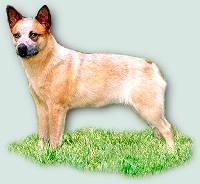 Other diseases of the eyes are diagnosed by
an eye examination
performed by a Certified Canine Veterinary Optomologist. What the
veterinary sees is recorded on a Canine Eye Registration Form which is
forwarded to the Canine Eye Registration Foundation (CERF) for
evaluation. This CERF Exam as it is known is valid for 12 months
from the date of the exam. The certification relates to Phenotype
(appearance) only at the time of the examination. It implies no
clearance for Genotype (possible “carrier”) or heritable ocular disease
development subsequent to the date of the examination. A CERF
Exam is not a substitute for a blood test for Progressive Retinal
Atrophy. Other diseases of the eyes are diagnosed by
an eye examination
performed by a Certified Canine Veterinary Optomologist. What the
veterinary sees is recorded on a Canine Eye Registration Form which is
forwarded to the Canine Eye Registration Foundation (CERF) for
evaluation. This CERF Exam as it is known is valid for 12 months
from the date of the exam. The certification relates to Phenotype
(appearance) only at the time of the examination. It implies no
clearance for Genotype (possible “carrier”) or heritable ocular disease
development subsequent to the date of the examination. A CERF
Exam is not a substitute for a blood test for Progressive Retinal
Atrophy.Epilepsy and Heart conditions occur in certain bloodlines. The probability of these genetic conditions can be determined by studying and understanding bloodlines. Bloodlines appear in the dog’s extended pedigree. TaliHO evaluates all of its dogs and puppies for known genetic conditions and its breeding stock is as genetically sound as possible.
NUTRITION Appropriate and timely medical attention and care are factors in quality-bred dogs. Preventive medical attention with vaccines, testing, exams and close observation are important to the health and quality life of dogs. AFFILIATIONS TaliHO holds membership and is active in numerous canine organizations among them the followin::  Australian Cattledog Club of
 (Past North Central Regional Director). 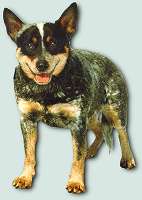 Siberian Husky Club of America
Minnesota Purebred Dog Breeders
Michigan Association for Purebred Dogs
Kalamazoo Kennel Club
Third Leg Obedience Training Club
Siberian Husky Club of America
Minnesota Purebred Dog Breeders
Michigan Association for Purebred Dogs
Kalamazoo Kennel Club
Third Leg Obedience Training Club(Past Board of Directors) American Kennel Club
Canadian Kennel Club
United Kennel ClubIf you have questions about the breed, feel free to email TaliHO by clicking on  and we will
be happy to answer your questions. and we will
be happy to answer your questions. |

TaliHO
|
ACDs | Sires |
Dames |
Puppies & Dogs |
International Offspring |
Loving Memories |
Kodak Moments |
Professional Handling
|
News
|
Email
TaliHO Australian Cattledogs
P.O. Box 303 · Middleville Michigan 49333
(269) 795-7496
taliho@charter.net
©
TaliHO Australian Cattledogs
Kennels and Training Center